

Blueprint Case Study: A Non-Fiction Book, Every Page Checked
One non-fiction book,
every page of the Blueprint.
The book is The Attention Sovereignty Protocol, a short guide for people who buy books and no longer finish them. It started as a single production prompt and an AI first draft. The draft read well. Checked properly, it undersold its own promise with the wrong reading-speed maths, leaned on pop neuroscience, and pointed its QR code at a page that did not exist.
Below is the page-by-page scorecard, what the human passes caught, the finished pages, and the upload files. It is a proof edition shared as an example: not for sale, and never launched, so there are no sales results to report.
The Blueprint scorecard
The statuses are strict on purpose. “Done late” means the step was done after drafting instead of before, which is the wrong order, and the scorecard says so.
| Page | Blueprint step | Status | What happened |
|---|---|---|---|
| 1 | Cover (of the manual) | Not applicable | The manual's own cover |
| 2 | Execution Contract | Not applicable | A personal commitment for a human author |
| 3 | The 2026 Market | Done | Market facts verified for this book |
| 4 | Tech Stack | Adapted | Cover and diagrams drawn as code instead of Canva |
| 5 | Deep Work Engine | Not applicable | Built in one AI-driven session |
| 6 | Silo Strategy | Done | Book, live bridge link, 6 social posts |
| 7 | Second Brain | Done late | Built; NotebookLM upload not done |
| 8 | C-I-S-O prompts | Done late | Master prompt rewritten in C-I-S-O |
| 9 | Income Stack | Done | North Star filled in; affiliates declined |
| 10 | 30-Day Roadmap | Adapted | Planned vs. actual recorded |
| 11 | Market forensics & review mine | Done late | 32 real review quotes; changed the book |
| 12 | AI market analyst | Done late | Verdict: crowded but open |
| 13 | Blue Ocean hooks | Done | Two options drafted; title kept |
| 14 | AI Voice Lab | Done late | Measured against the author's own writing |
| 15 | Revenue Engine | Done | Bridge live; backend mapped |
| 16 | Outline (Rule of 10) | Adapted | 14 modules, same 3-part structure |
| 17 | Book Bible | Done late | Built, then used to check every number |
| 18 | Vomit draft | Done | Genuine, untouched AI draft |
| 19 | Chapter 1 hook | Done | Pain Mirror; the loop closes in Module 14 |
| 20 | Human-in-the-loop edit | Done | 73 logged edits over 5 rounds |
| 21 | Human-in-the-loop surgery | Done | Scrub list, drift audit, 25-word rule |
| 22 | Bento grid design | Done | Scannability audit passed |
| 23 | Formatting standards | Done | 6×9 interior, EPUB, phone-safe tables |
| 24 | Cover brief | Done | Passes the 1-inch thumbnail test |
| 25 | Legal shield & export | Done | AI disclosure, CMYK cover, EpubCheck clean |
| 26 | Review engine | Prepared | Street-team email ready |
| 27 | Amazon Ads 101 | Prepared | Keywords and ad copy ready |
| 28 | Audio asset | Prepared | Readability check done; no audio made |
| 29 | Launch day | Prepared | Hour-by-hour plan |
| 30 | Beyond the book | Prepared | Ecosystem map |
13 done · 6 done late (after drafting) · 3 adapted · 5 prepared, not run · 3 not applicable. None skipped silently.
What the human passes caught
“somewhere between seven and ten books a year”
Final
“close to ten books” at a careful pace, about 18 at full speed, using the measured adult average of about 238 words a minute (Brysbaert, 2019).
“Re-sensitize the dopamine baseline.”
Final
“Rebuild your tolerance for slow input.” Brain claims were replaced with named research readers can check.
What real readers complain about
Blueprint Page 11 says to read the 1-star and 2-star reviews of the top competing books. We did it after drafting (the wrong order), logging 32 real negative-review quotes. It still changed the book.
It also found a gap no competitor owns: readers saying their job trains them to skim. That became a new passage in Module 2.
Eight pages from the book
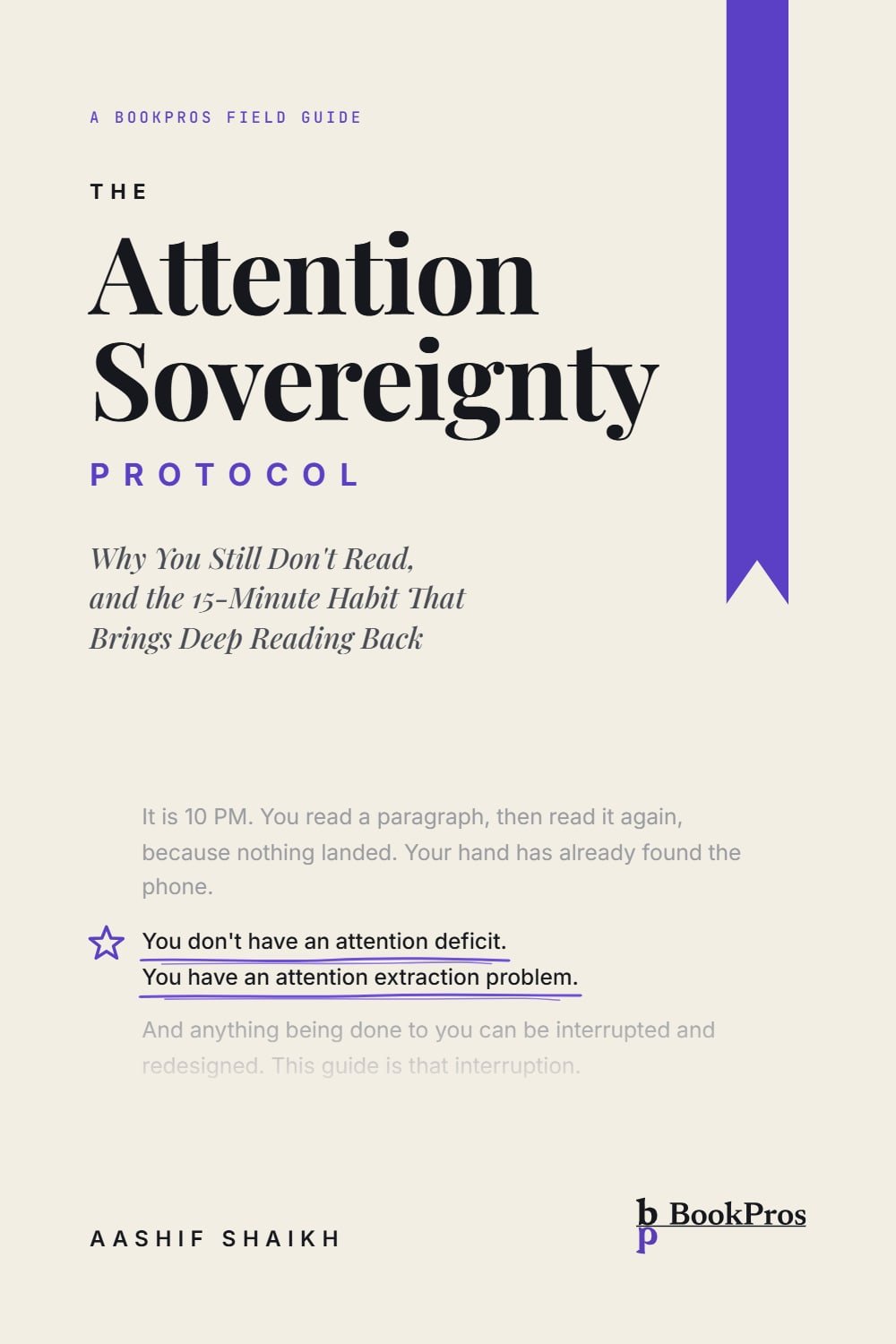
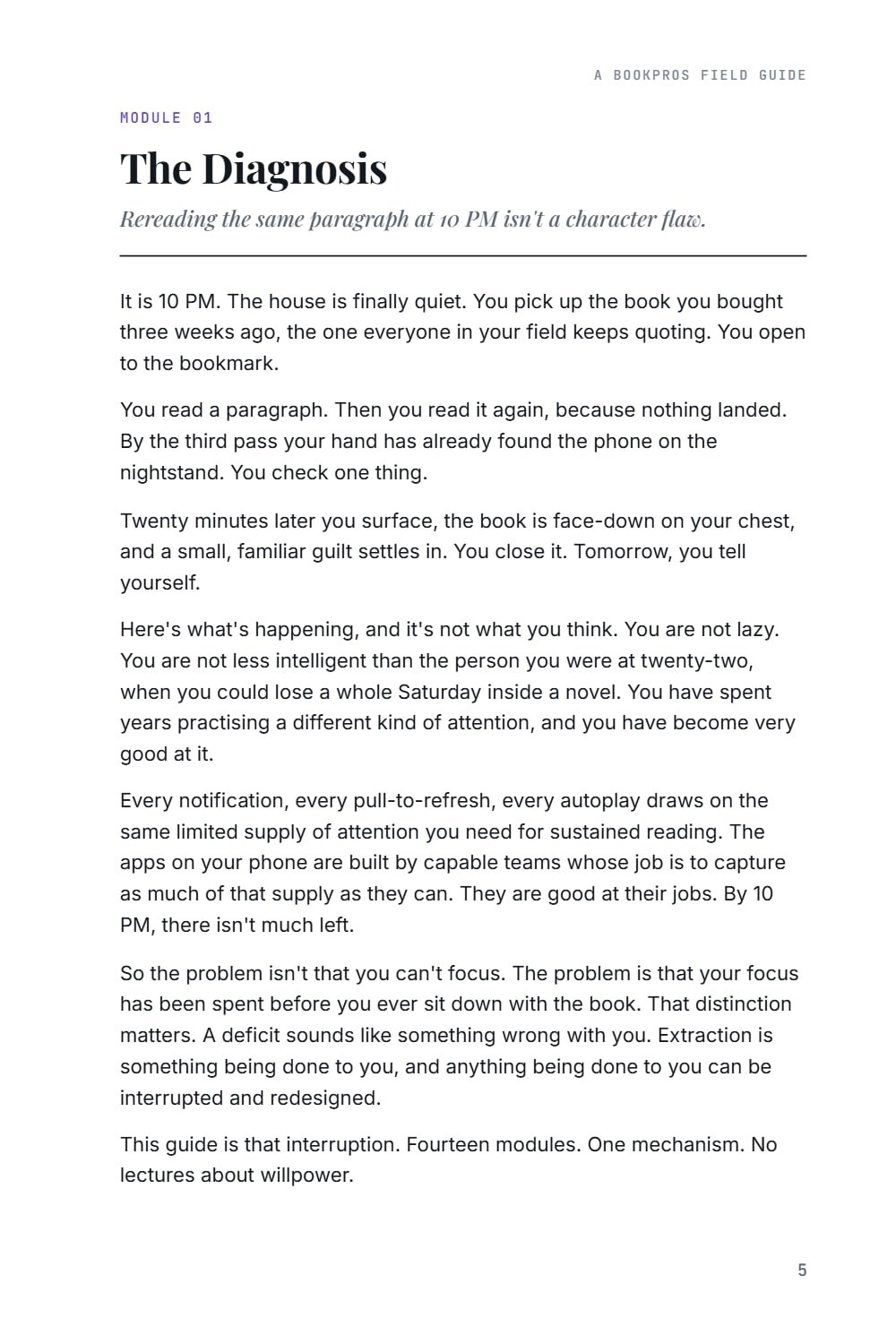
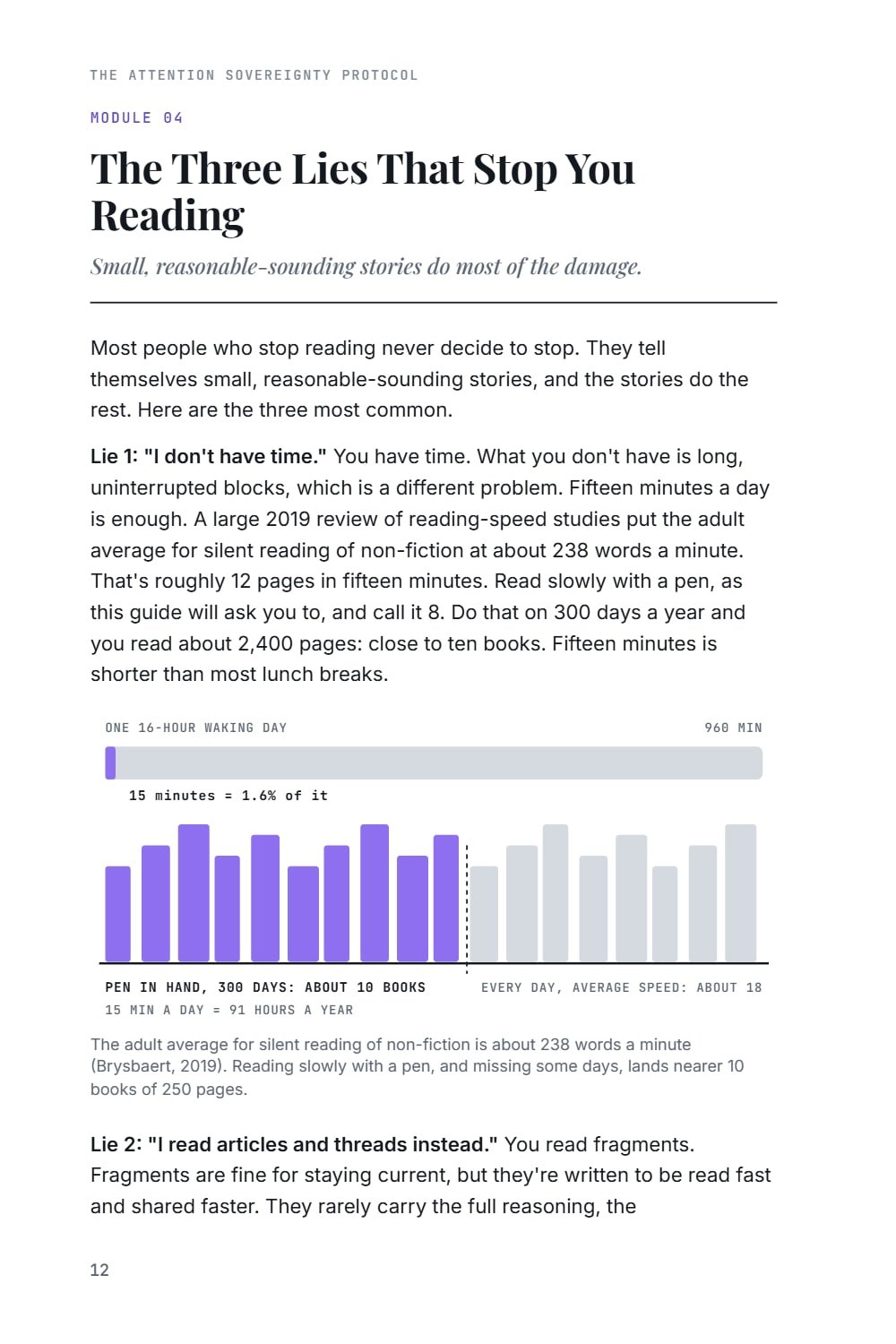
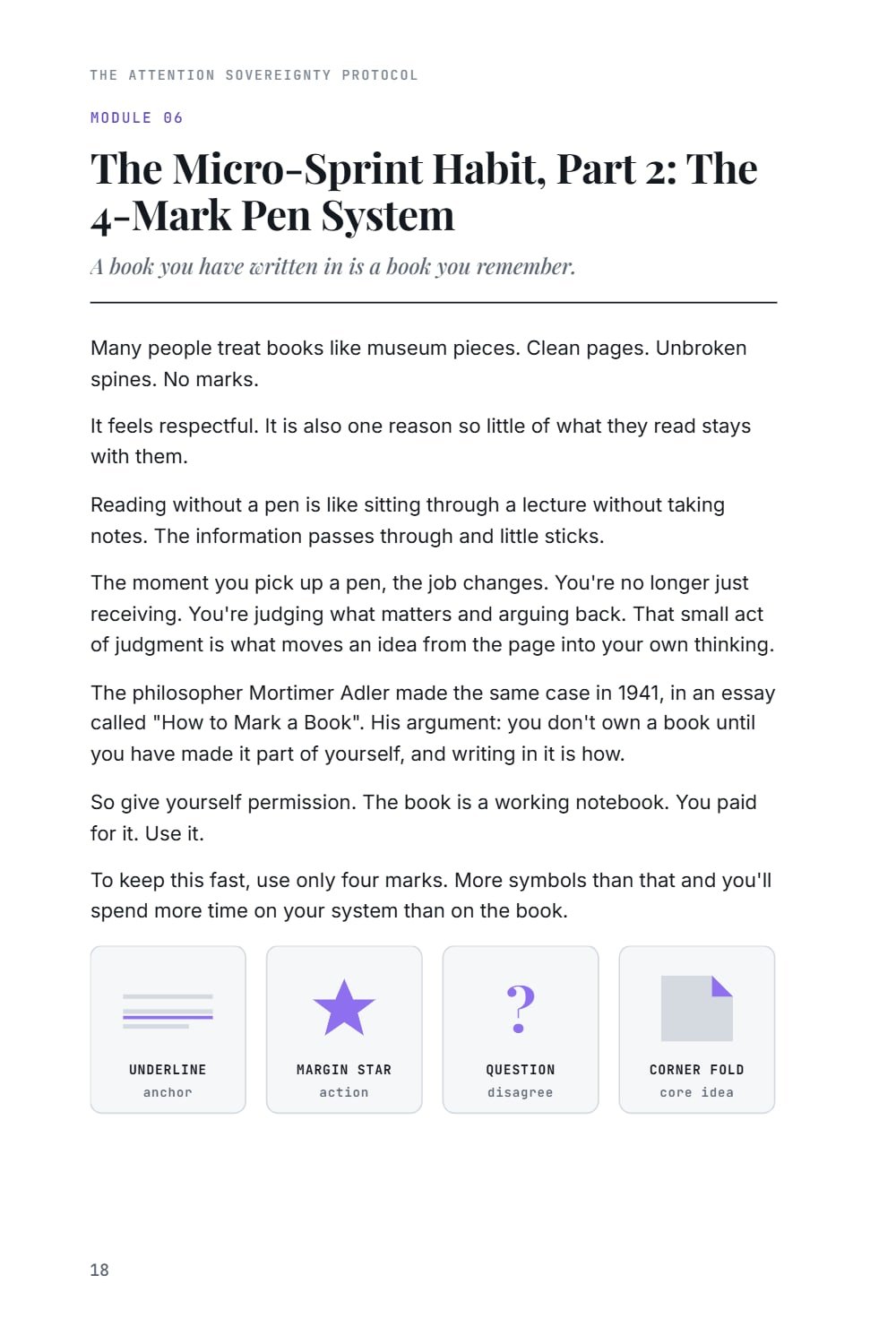
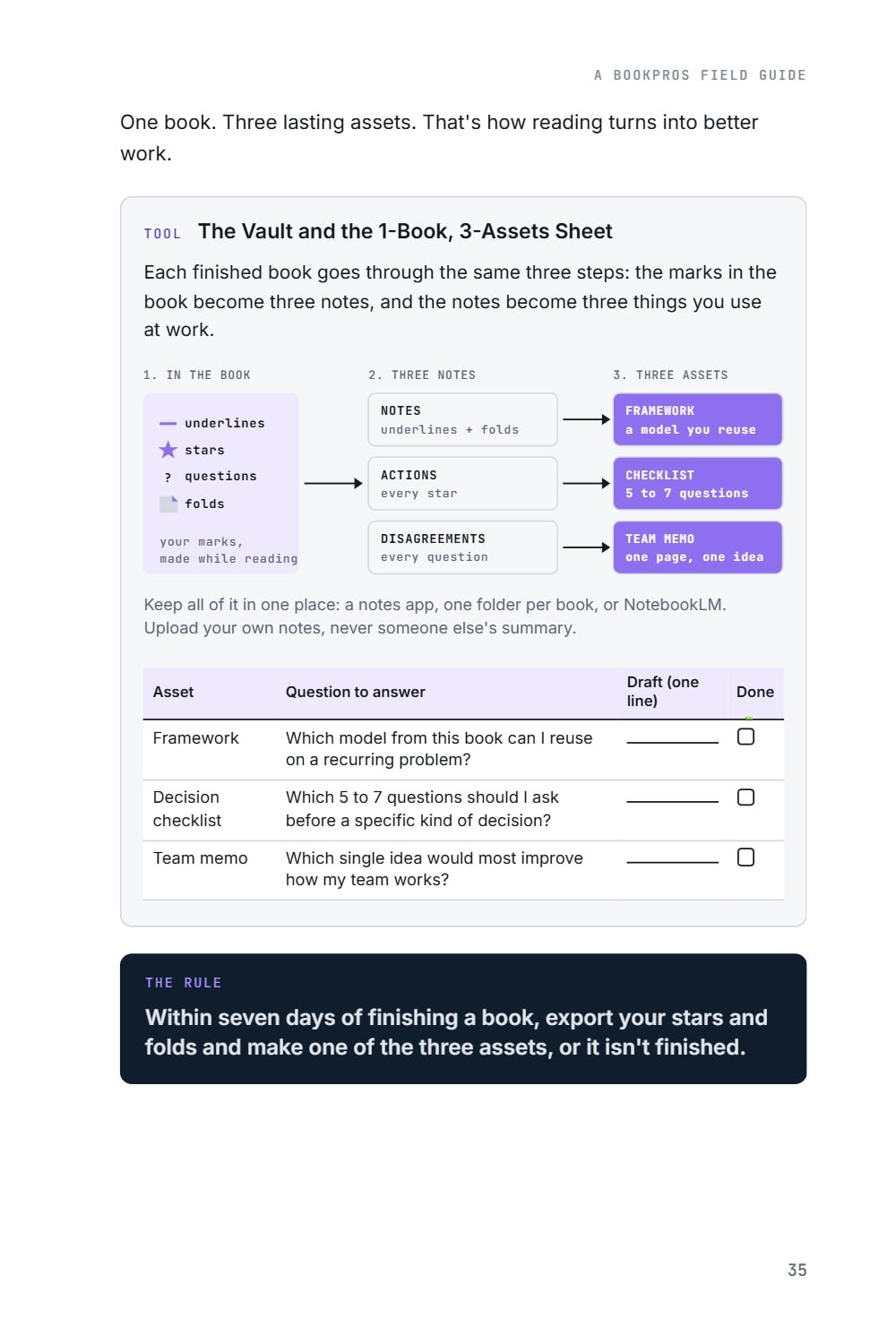
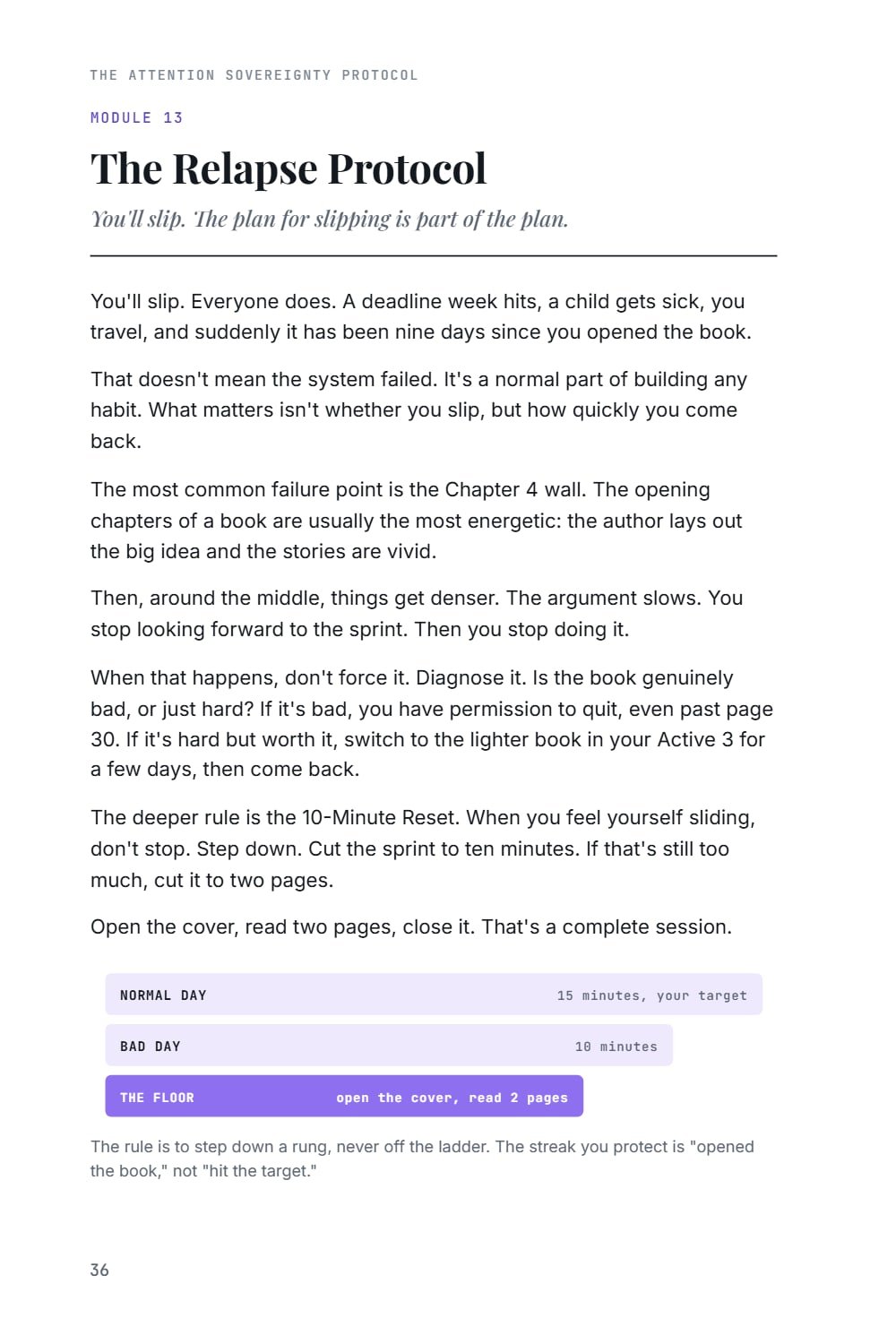
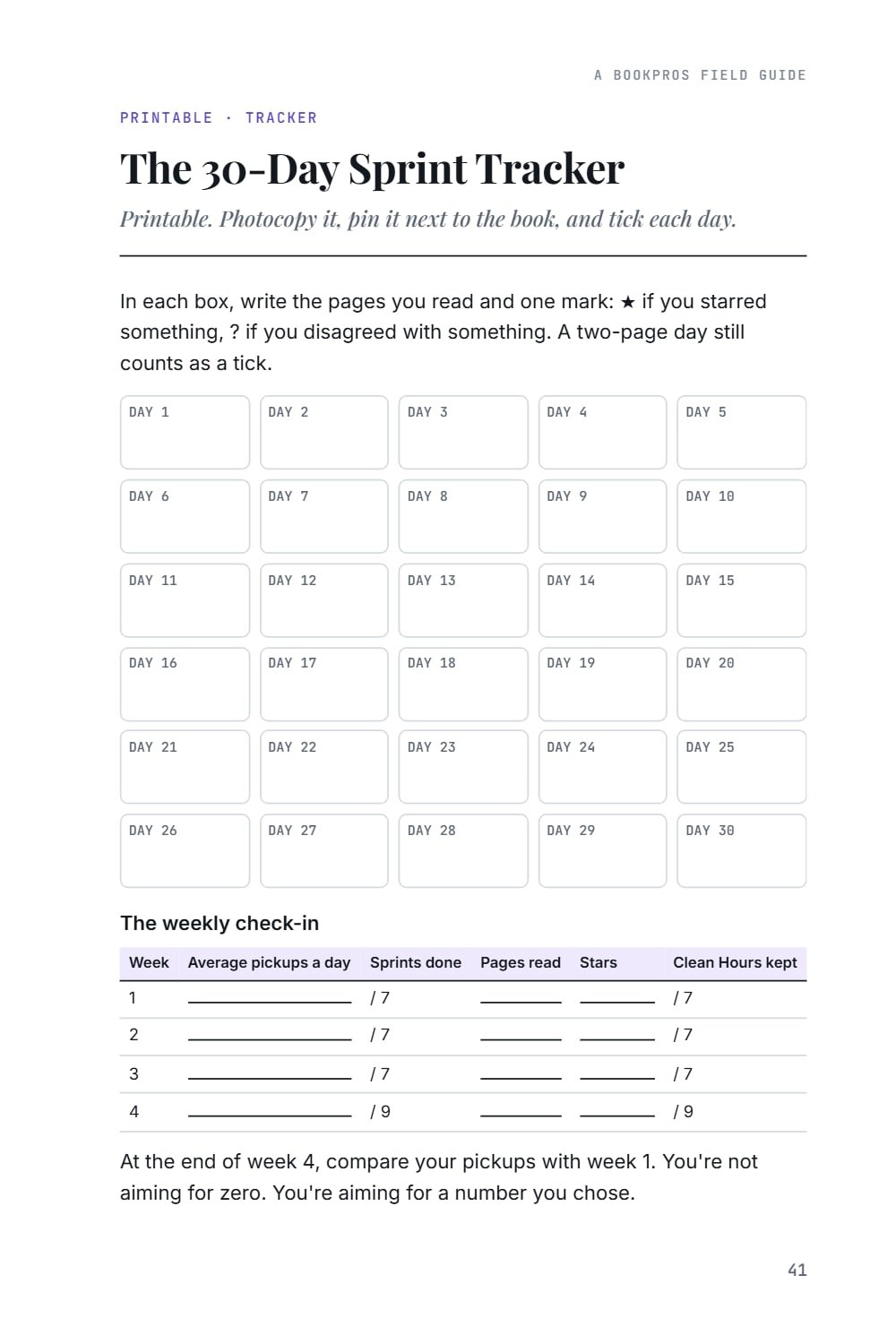
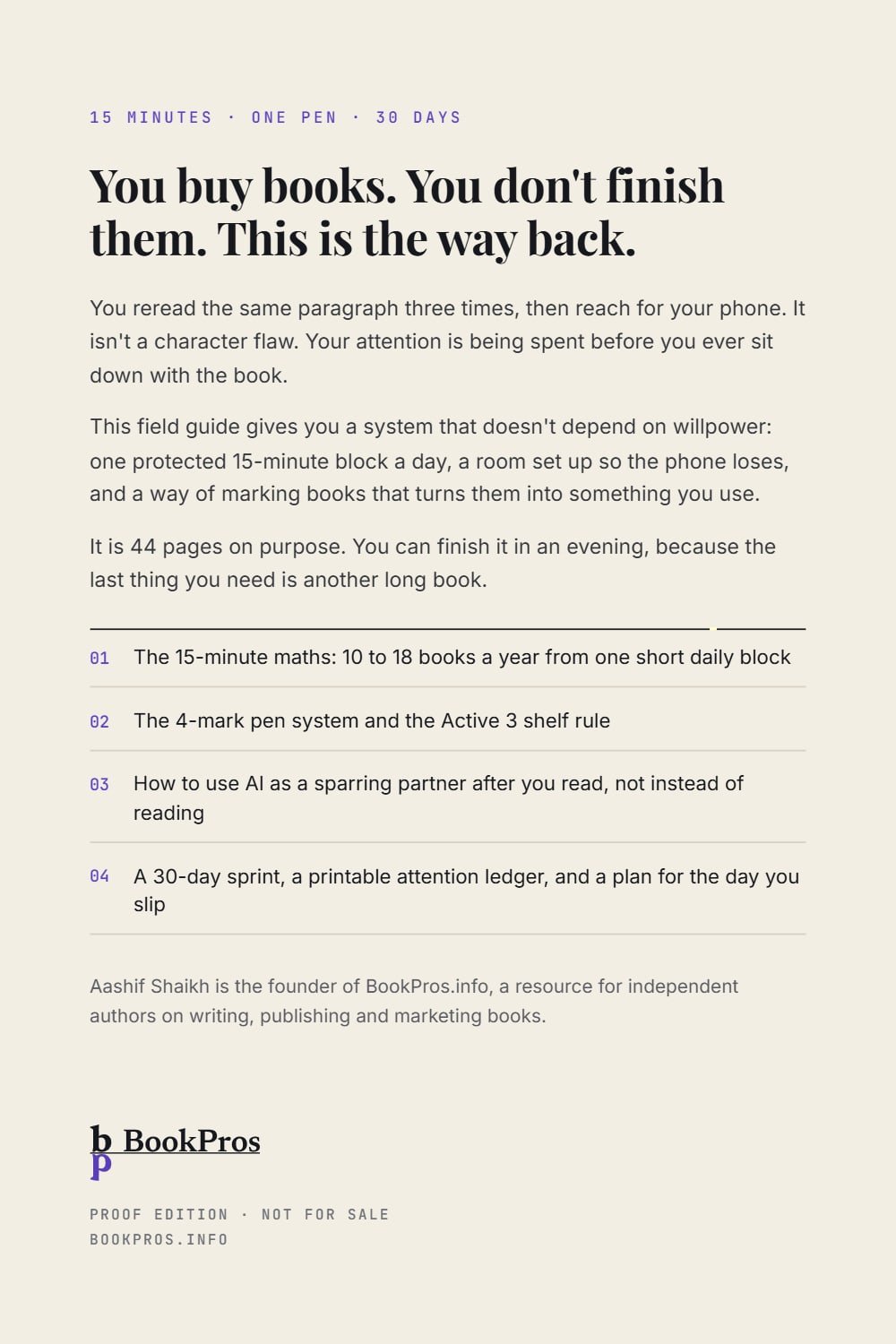
Five lessons about the Blueprint itself
Use these as your template
The files a KDP paperback upload needs: a 6 x 9 in black-and-white interior with fonts embedded, and a wraparound cover converted to CMYK at 300 DPI, sized for 44 pages. The EPUB edition is here too: it passes EpubCheck with no errors or warnings.
See also the first case study: one picture book, start to finish. The first draft of this book was written by AI (Claude) and then edited, fact-checked and designed under the author's direction; the diagrams and cover were also drawn by AI, as code.