
Blueprint Case Study: A Bedtime Story Becomes a Graphic Novel

Blueprint case study 3Launching soon

A bedtime story becomes a graphic novel
“The Day the Birds Stopped Coming” by Aashif Shaikh: a 26-page, full-colour graphic novel for ages 6 to 12, taken from an 8-page bedtime story to print-ready files with the Author Blueprint.
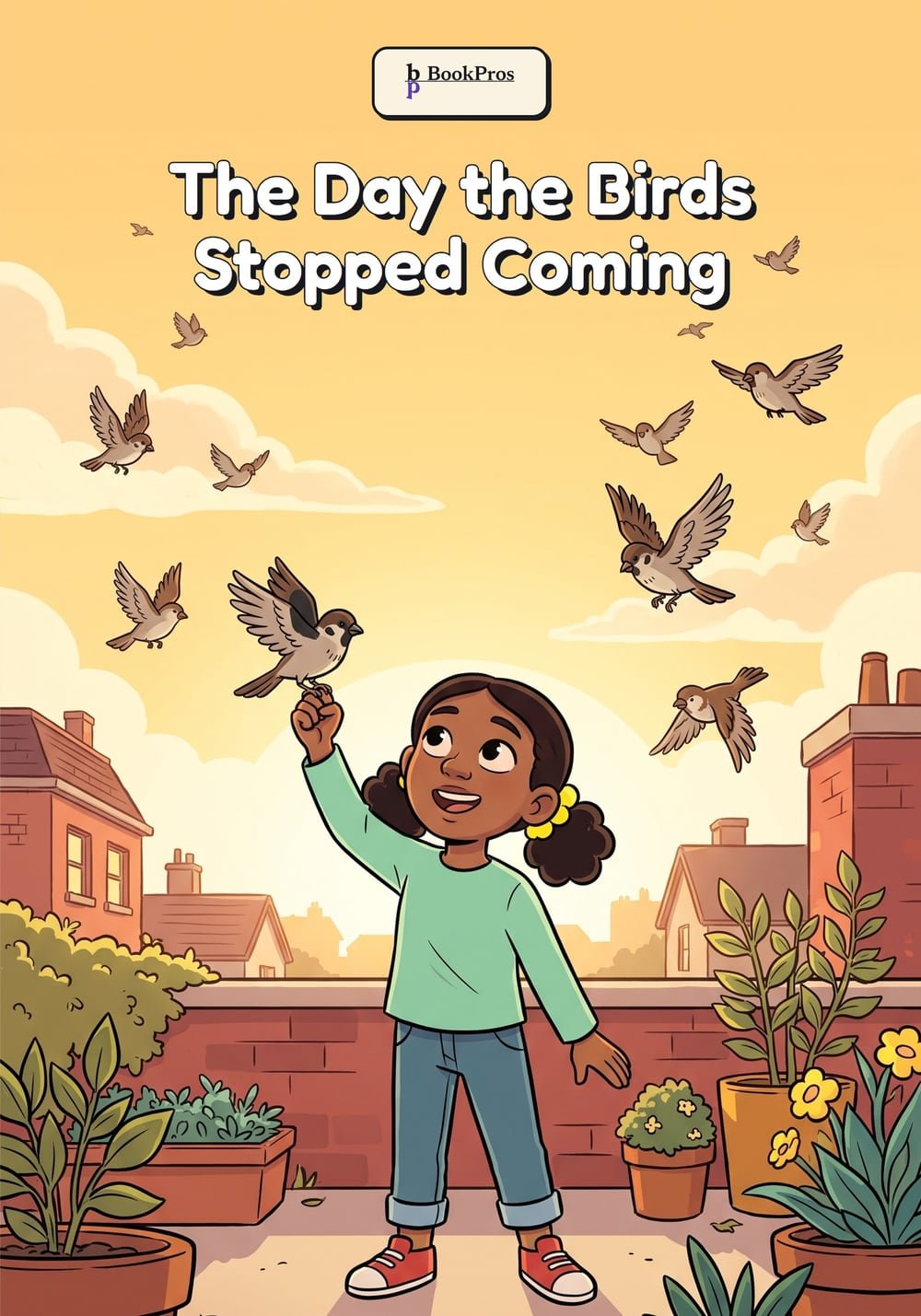
Front cover of The Day the Birds Stopped Coming: Hani on a city rooftop at sunrise with Chami Champ the sparrow on her hand
Front cover
Where it started

Two stories every night

Every night, the founder’s daughter Haniya asks for two stories. This was the one she asked for again and again: Hani, a kind ten-year-old, promises to feed the rooftop sparrows while her mom is away. Then she falls ill, the seed disappears, and the roof goes quiet, until one brave sparrow, Chami Champ, comes looking for her.

It began as an 8-page script. This is what happened when we ran it through the Blueprint, including everything that went wrong.

What the Blueprint did

From script to print-ready files

Pages 11-12 · Validate
The research tested the idea
The story came first, which is the “usual approach” the Blueprint warns about. So the review mine tested it: 28 real complaints from low-rated reviews of similar graphic novels, each checked word for word. The top ones: “pretty art, nothing happens”, flat characters, and wellness stories that preach.
Pages 16-21 · Review
The draft got braver
The first draft left a ten-year-old home alone for four days, gave the neighbour no reason and no change, and let things happen to Hani instead of because of her. Now Nani stays over, Mrs. Joo is wrong but not wicked, and Hani solves it herself.
Page 17 · Book Bible
Rules the art must follow
Five character sheets and a short list of world rules: bread is not bird food, a class cold (not the birds) made Hani ill, and Chami Champ’s dark patch is always on his left wing.
Pages 18-19 · Script
8 pages became 20
Every moment of the bedtime story was kept, and 69 panels were written around them, with a real deadline and an ending Hani earns.
Pages 22-24 · Art
Reference sheets first
Character and location sheets came before any panel. Every panel was made with Google’s Gemini image model, then checked by hand; lettering and layout were done separately.
Pages 23, 25 · Production
Ready for KDP
A 7 x 10 in full-colour interior with bleed, a wraparound cover, a fixed-layout ebook, and an honest AI disclosure on the copyright page.
A look inside

Four pages from the book

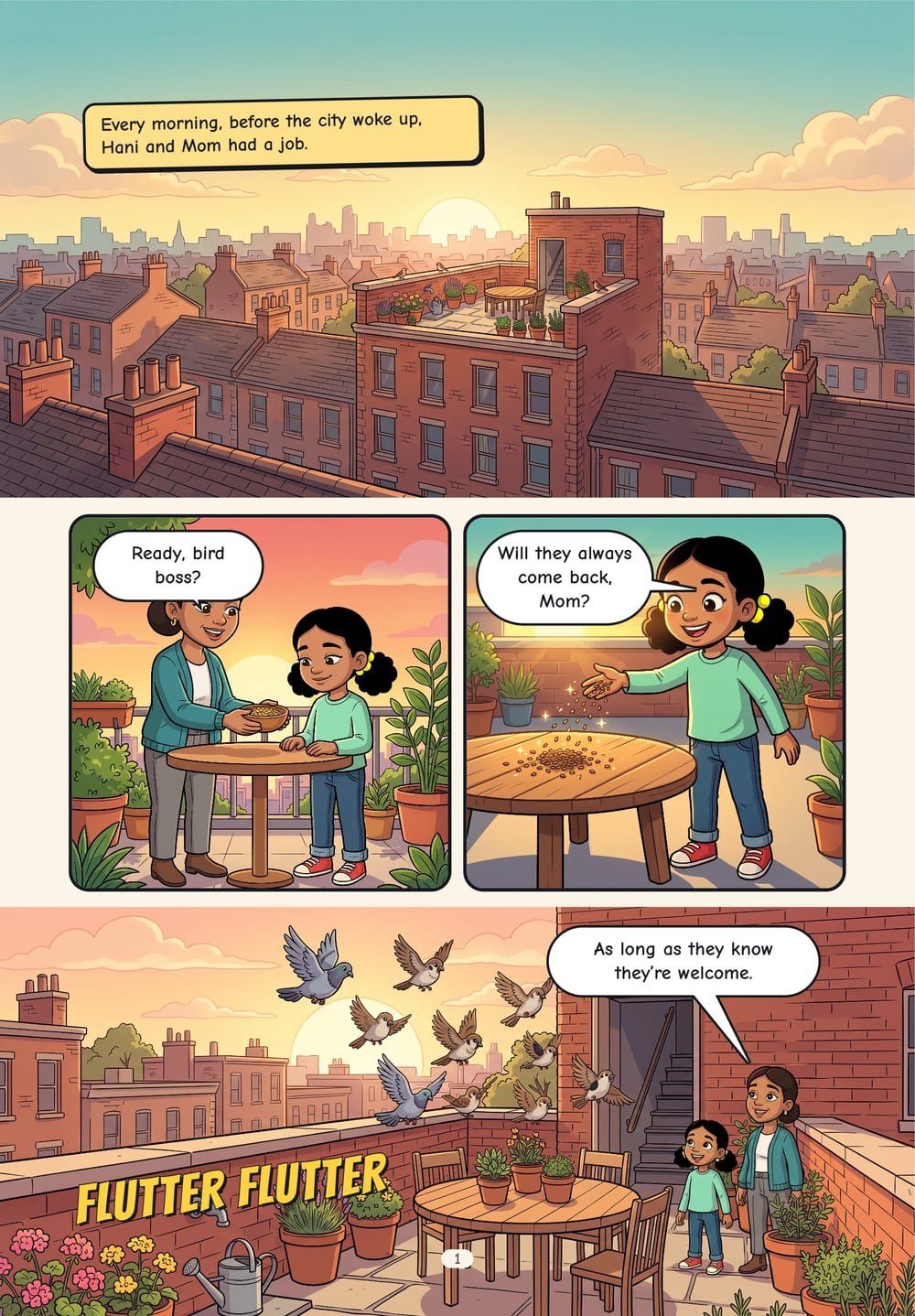
Page 1: dawn over the city rooftops, Hani and Mom feed the sparrows
Page 1
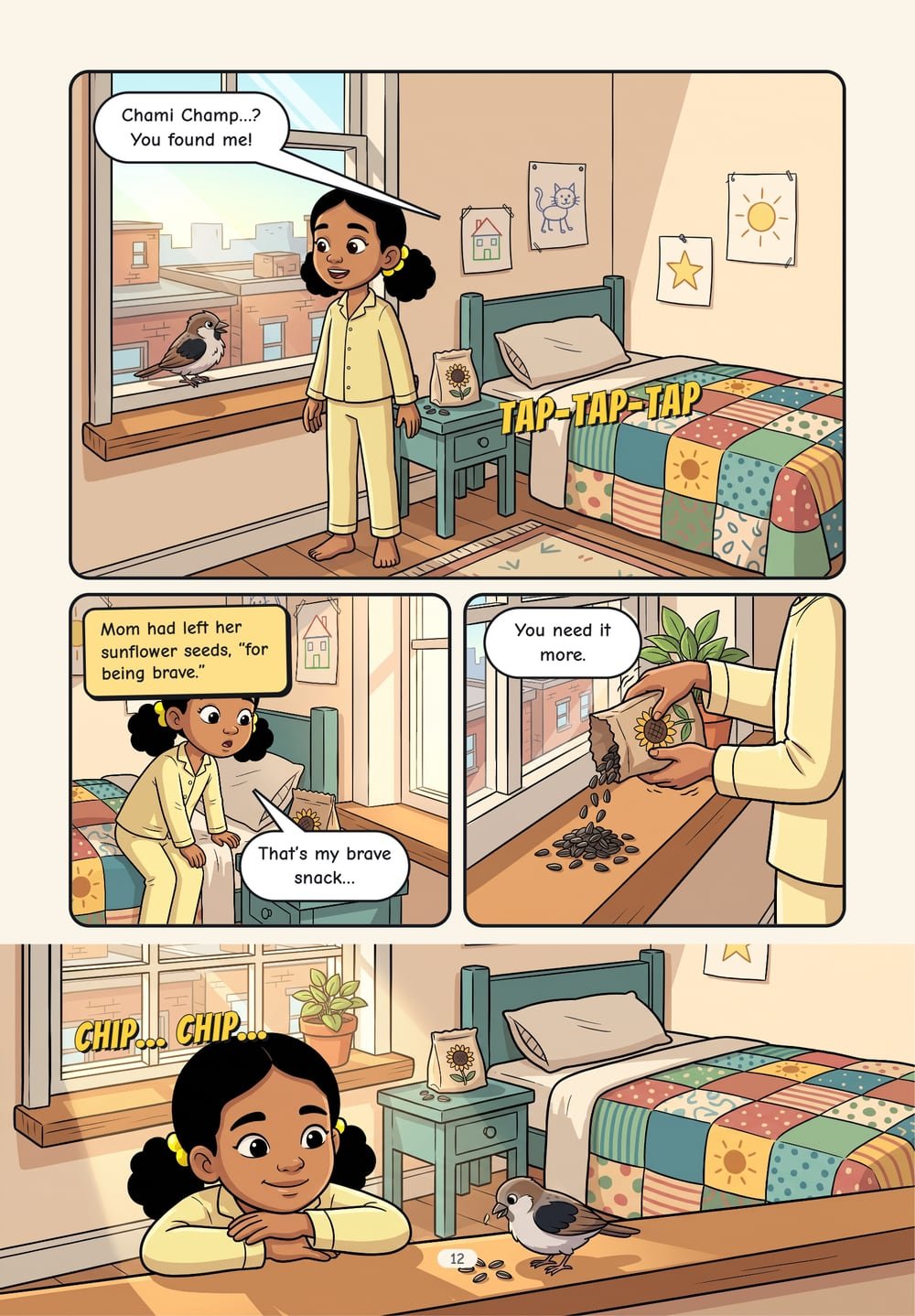
Page 12: Chami Champ taps at the window and Hani gives him her sunflower seeds
Page 12
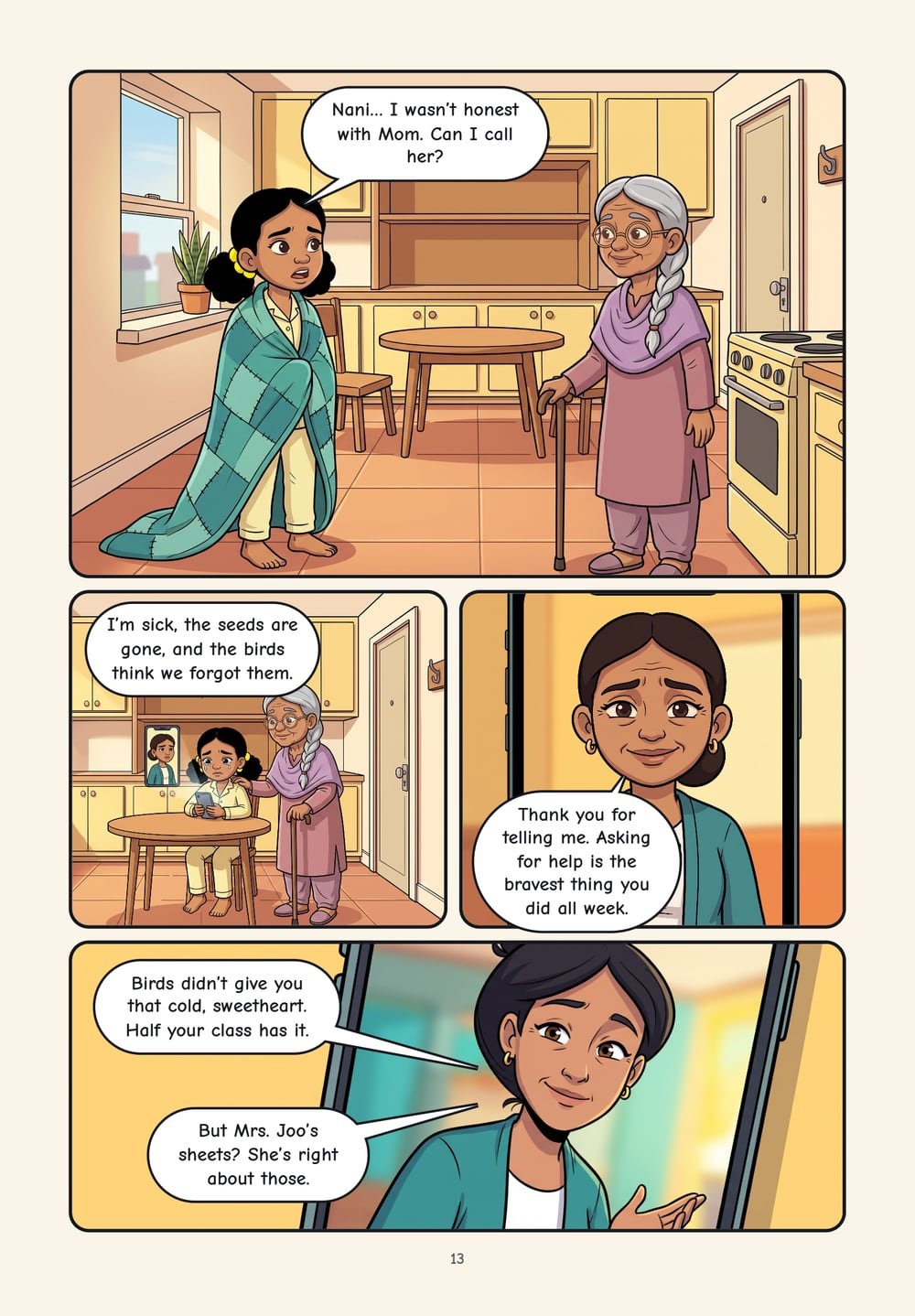
Page 13: Hani tells Mom the truth on a video call
Page 13
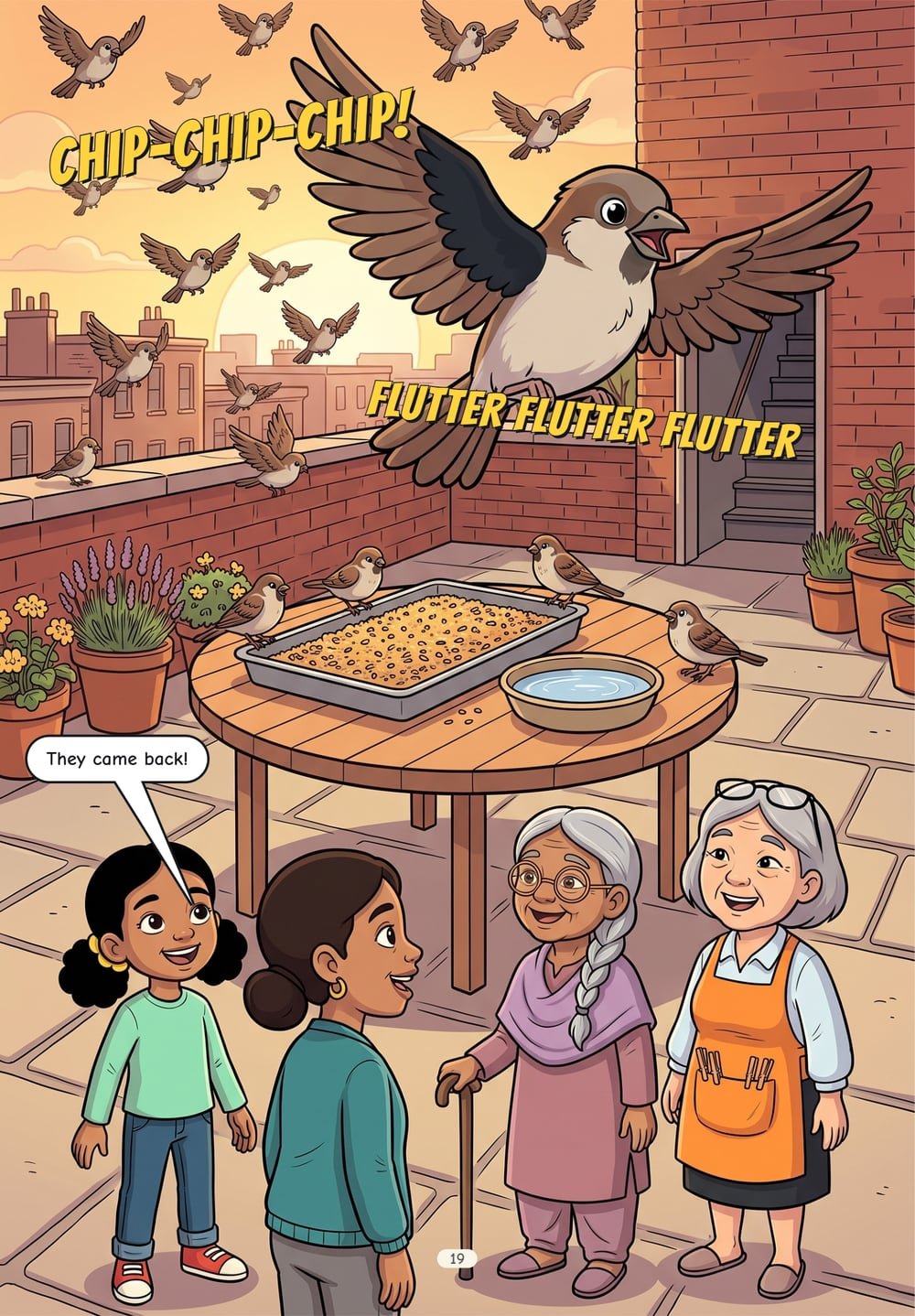
Page 19: the full-page moment when the flock returns to the roof
Page 19
What went wrong

And how it was fixed

Consistency
About 30 panels redrawn
The image model drew two Hanis in one panel, put the sparrow’s patch on the wrong wing, left seed jars on a shelf after they had been taken, and showed sneakers in bed. Every panel was checked; about 30 were redrawn or corrected.
Safety
Nobody climbs the roof wall
One panel showed Hani leaning over a four-storey roof wall. It was redrawn with her safely behind it. A children’s book is judged by the parents who buy it.
Design
“It looks like a magazine”
The founder’s first reaction to the early pages. Rounded panels, full-bleed moments and more close-up faces turned it into a comic.
Independent review
Scored before it was fixed
A separate reviewer rated the first full draft: story 7.5, art 7, consistency 5 out of 10, with a must-fix list. Those fixes are now in the book.
The author’s decisions

What the author brought that no tool could

The Blueprint and the AI tools did the heavy lifting. These calls came from the author, and they shaped the book more than any prompt did.

Story first
His own story, not a market pick
Research suggested other angles. He chose the bedtime story his daughter asked for again and again, and used the research to make that story stronger instead of replacing it.
Audience
Ages 6 to 12, US, UK and Europe first
He set the readers and the markets up front. That decided the city setting, the US English, the reading level and a grandmother character every family recognizes.
Quality bar
A children’s book, not a magazine
His first look at the early pages: “it looks like a magazine.” That one note led to a full redesign into a real comic, with full-bleed moments and close-up faces.
Honesty
An independent reviewer, three times
He asked for an outside quality check rather than a self-review, and for the scores to be published here, low ones included.
Voice
The author’s note in his own words
The dedication and the note about time with his daughter were written from his own experience, not generated.
Brand
BookPros on the cover
He chose to put the BookPros logo on the cover instead of his name, so the book also shows what the Blueprint can do for other first-time authors.
Independent QC

Three reviews, three rounds of fixes

A separate reviewer, who had not helped make the book, scored every full draft out of 10 and gave a must-fix list. We fixed the list, then asked again. The author’s own choices (logo-only cover, the note about the Blueprint) were not marked down.

First draftRound 2Round 3
Story7.588.5
Visuals777.5
Consistency567
Lettering and layout66.57.5
Covers687
Front and back matter–88.5
Overall readiness56.57.5
Round 1 found
Wrong wing, wrong speaker
Chami’s patch on the wrong wing, Nani on a roof she can’t climb, and about ten speech-balloon tails pointing at the wrong person.
Round 2 found
Three different plans
Hani’s Bird Café plan was drawn three different ways, and one staircase scene was off-model. All redrawn to match.
Round 3 found
The café was missing
In the big finale the table was bare: no tray, no water bowl. Both final pages were redrawn with the café Hani built.

After round 3’s fixes, the reviewer’s verdict was that the book is ready for a printed proof.

The covers

Front and back

Front cover of The Day the Birds Stopped Coming: Hani on a city rooftop at sunrise with Chami Champ the sparrow on her hand
Front cover
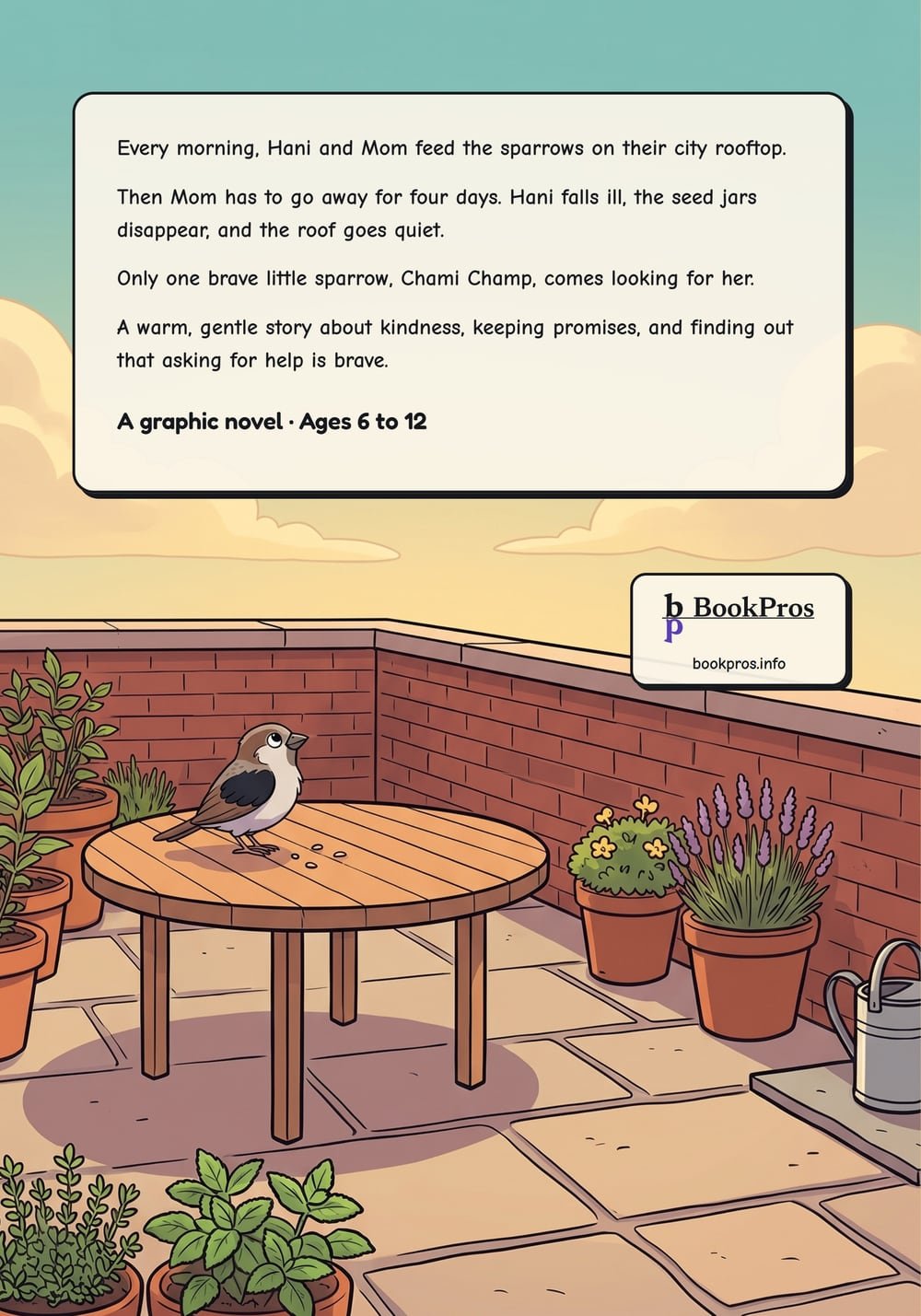
Back cover: Chami Champ alone on the empty roof table, with the story blurb
Back cover
For print, KDP takes one wraparound file: back, spine and front together. The spine is only 0.06 in wide at 26 pages, too thin for text. The barcode corner on the back is left empty for KDP.
The real numbers

What it took

Art cost
About $16
About 110 AI images, including tests and redraws, logged image by image.
Time
Two working days
From the approved script to print-ready files, with the founder reviewing every stage.
Sales
Not yet
The book has not launched. Real results will be added here after launch, whatever they are.
What it taught us

About the Blueprint itself

The Blueprint had no path for authors who already have a draft, no guidance for comics and picture books, and nothing on privacy for family stories. All three are going into the next edition.

If you have a story you tell someone you love, this is the same step-by-step plan we used. See the other case studies in the Resource Vault.

The 2026 Author Blueprint · Coming soon
The same system, for your first book.
Join the waitlist